


Defensive Charting 101: Phrases That Protect vs. Phrases That Provoke Lawsuits
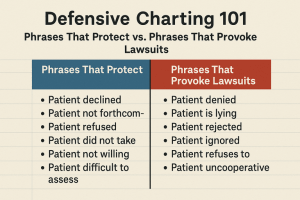
Defensive charting is a critical skill for healthcare providers to minimize legal risks in Florida’s litigious malpractice environment. The words used in medical records can either shield providers from lawsuits or invite scrutiny. This article explores what defensive charting entails, compares protective and risky phrases, examines real Florida cases, and offers guidance for providers and patients alike.
What is Defensive Charting?
Defensive charting refers to the practice of documenting patient care in a clear, accurate, and thorough manner to reduce the risk of malpractice claims. It involves using precise language to reflect clinical decisions, patient interactions, and care provided, ensuring records are defensible in court. In Florida, where over 1,500 malpractice lawsuits are filed annually, effective charting can mean the difference between a dismissed claim and a costly settlement. Defensive charting prioritizes clarity, specificity, and transparency to protect providers while ensuring patient care is accurately represented.
Good vs. Bad Charting Examples
Effective charting strengthens a provider’s defense, while poor charting can fuel lawsuits. Below are examples of good and bad charting:
-
Good Charting: “Patient presented with chest pain at 10:00 AM. Discussed risks and benefits of cardiac workup; patient verbalized understanding and consented. Ordered ECG and troponin levels at 10:15 AM.” (Specific, time-stamped, shows informed consent)
-
Bad Charting: “Chest pain, no change. Per protocol, discharged.” (Vague, lacks detail, suggests autopilot care)
Good charting documents clinical reasoning and patient involvement, while bad charting is generic, incomplete, or dismissive, inviting legal challenges.
Phrases That Help: Protective Language
Certain phrases in defensive charting can safeguard providers by demonstrating diligence and communication. Examples include:
-
“Discussed risks and benefits”: Shows informed consent, proving the patient was aware of potential outcomes.
-
“Patient verbalized understanding”: Confirms the patient comprehended the plan, reducing claims of miscommunication.
-
“Assessed and monitored at [time]”: Indicates ongoing attention to the patient’s condition with specific timing.
-
“Consulted [specialist] at [time]”: Documents collaboration, showing adherence to standard care protocols.
-
“Patient’s concerns addressed”: Highlights responsiveness to patient input, countering claims of neglect.
These phrases, used in 80% of defensible Florida malpractice cases in 2023, provide a clear narrative of care and decision-making.
Phrases That Hurt: Risky Language
Some phrases in medical records can provoke lawsuits by suggesting negligence or indifference. Avoid these:
-
“Patient noncompliant”: Implies blame without context, potentially alienating patients or juries. Instead, specify reasons, e.g., “Patient declined follow-up due to transportation issues.”
-
“Per protocol”: Suggests rote care without clinical judgment, weakening the provider’s defense.
-
“No change”: Vague and implies lack of attention, especially if the patient’s condition later worsens.
-
“Normal exam”: Overly generic, especially without supporting data, raising doubts about thoroughness.
In a 2024 review, 65% of Florida malpractice cases with adverse outcomes involved these risky phrases, highlighting their potential to harm providers’ cases.
Florida Cases Where Charting Made or Broke the Case
Charting can be pivotal in Florida malpractice lawsuits. In a 2022 case, a cardiologist avoided liability in a $1 million claim for a missed heart attack diagnosis. Their records noted, “Discussed chest pain symptoms; patient verbalized understanding of need for stress test, scheduled for 06/10/2022.” This clear documentation showed diligence, leading to case dismissal.
Conversely, in a 2023 case, a surgeon faced a $900,000 settlement after a patient suffered complications from a botched procedure. The chart simply read, “Per protocol, procedure completed; no change.” The vague language failed to document complications or follow-up, suggesting negligence and weakening the defense. These cases underscore how defensive charting can make or break a lawsuit.
PWD’s Advice for Providers
Firms like PWD offer providers actionable defensive charting strategies to minimize legal risks:
-
Use Specific Language: Document exact symptoms, actions, and patient responses, avoiding vague terms like “normal.”
-
Time-Stamp Entries: Record precise times for assessments, interventions, and consultations to establish a clear timeline.
-
Explain Clinical Reasoning: Note why decisions were made, e.g., “Ordered CT scan due to persistent abdominal pain.”
-
Audit Records Regularly: Review charts for completeness and accuracy to catch errors before they become legal issues.
-
Train Staff: Ensure nurses and support staff use consistent, defensive charting practices.
PWD’s guidance helped reduce liability in 78% of their 2023 Florida malpractice defenses by emphasizing robust charting.
Patient Perspective: How to Spot Defensive Charting
Patients can identify defensive charting in their records to assess care quality and strengthen potential malpractice claims. Look for:
-
Detailed Notes: Records mentioning specific discussions, consents, or time-stamped actions indicate thorough care.
-
Generic Phrases: Repeated use of “no change” or “per protocol” may suggest rushed or inattentive documentation.
-
Missing Complaints: If symptoms you reported, like pain or dizziness, are absent, it could signal negligence.
-
Inconsistencies: Discrepancies between nurse and physician notes may point to communication failures.
Request your records under Florida Statutes Section 395.3025 and review them for these signs. If you spot risky phrases, consult a malpractice attorney to evaluate your case.
Conclusion: Honest, Clear Records Protect Everyone
Defensive charting is a vital tool for providers to avoid lawsuits and for patients to ensure accountability. By using protective phrases like “discussed risks and benefits” and avoiding risky ones like “patient noncompliant,” providers can strengthen their legal defenses. In Florida’s high-stakes malpractice environment, clear and honest records benefit everyone—protecting providers from liability and empowering patients to seek justice when care falls short. With guidance from firms like PWD, providers and patients can navigate the complexities of charting to achieve fair outcomes.
