


Top 5 Hidden Liable Parties in a Miami Truck Crash (It’s Not Always the Driver)
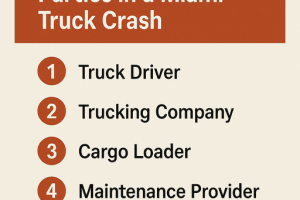
Truck accidents in Miami involve complex liability that extends far beyond the driver. Federal regulations, corporate negligence, and third-party errors create a web of responsibility where multiple hidden parties often share fault. Identifying these entities is critical for victims seeking full compensation.
1. Trucking Companies: The Overlooked Powerhouse
Trucking companies frequently evade scrutiny despite controlling critical safety factors:
- Negligent hiring practices: Employing drivers with poor safety records or inadequate training.
- Regulatory violations: Pressuring drivers to skip maintenance or exceed Hours of Service (HOS) limits.
- Inadequate oversight: Failing to monitor driver behavior or vehicle conditions.
Under respondeat superior, companies bear liability for employee actions. For example, if a driver caused a crash while rushing to meet a company-mandated deadline, the firm becomes directly accountable.
2. Maintenance Providers: Silent Contributors to Disaster
Third-party maintenance crews often escape initial blame despite critical errors:
- Ignored repairs: Overlooking worn brakes, tire defects, or steering failures.
- Falsified logs: Signing off on incomplete inspections.
- Cost-cutting measures: Using substandard parts to reduce expenses.
A 2025 Miami case revealed a maintenance contractor’s faulty brake repair caused a fatal I-95 pileup, shifting liability from the driver to the service provider.
3. Vehicle and Parts Manufacturers: Invisible Hands
Defective equipment triggers accidents where manufacturers bear responsibility:
- Faulty designs: Steering systems prone to failure at high speeds.
- Manufacturing flaws: Brake lines with corrosion vulnerabilities.
- Inadequate testing: Tires rated for lower loads than advertised.
Product liability claims can target manufacturers when forensic analysis proves defects directly caused crashes.
4. Cargo Loaders and Shippers: Unseen Instigators
Improper cargo loading causes 30% of Miami truck accidents, implicating:
- Unsecured loads: Shifting freight destabilizing trailers.
- Overloading: Exceeding weight limits, compromising braking.
- Hazardous materials: Improperly contained substances causing explosions.
Federal cargo securement rules (FMCSA §393.100) make loaders legally liable for violations.
5. Freight Brokers and Government Entities: Unexpected Players
Liability extends to unconventional parties:
- Freight brokers: Negligently hiring unsafe carriers to cut costs.
- Government agencies: Ignoring hazardous road conditions (e.g., potholes on I-75).
- Cargo owners: Prioritizing speed over safe loading protocols.
These parties often escape initial investigation but significantly impact case outcomes.
Why Identifying Hidden Parties Matters
Overlooking non-driver liability risks:
- Inadequate compensation: Missing high-limit insurance policies from manufacturers or corporations.
- Evidence loss: Critical data (maintenance logs, cargo manifests) disappearing post-accident.
- Legal deadlines: Unique statutes of limitations for government entities (as short as 6 months).
Thorough investigations involving black box analysis, FMCSA audits, and cargo documentation are essential to expose all responsible parties.
Key Takeaways
- Truck accidents involve multiple hidden liable parties beyond drivers, including trucking companies, maintenance crews, and manufacturers.
- Federal regulations (FMCSA) and Florida laws create overlapping liability frameworks.
- Immediate evidence preservation is crucial to prove negligence across all responsible entities.
Sources:
- Finding All Responsible Parties in Florida Trucking Lawsuits
- Establishing Trucking Company Liability
- Federal Trucking Regulation Violations
- Liability in Miami Truck Accidents
- Liability for Loose Truck Cargo
- Who’s Liable in Miami Truck Accidents?
- Miami Truck Accident Liability
- Shared Liability in Truck Accidents
