


How an “Open and Obvious” Hazard Could Affect Your Miami Slip and Fall Claim
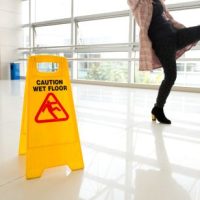
A common defense used by landowners in Florida slip and fall claims is that the hazard that injured the plaintiff was “open and obvious.” Basically, a landowner owes people they invite onto their property–such as a customer shopping at a store–a duty to keep the premises in reasonably safe condition. There is also a duty to warn such invitees of any “latent or concealed dangers” that the visitor could not discover through their own exercise of due care.
In some cases, however, a court may find that the danger was so “open and obvious” that it’s really not a danger–i.e., a person with common sense would know to avoid it–or that there is a danger but the business can reasonably expect the visitor to protect themselves.
Florida Appeals Court Revived Personal Injury Claim Against Miami Spa
Of course, what may seem like an “open and obvious” danger to a business may not be so open and obvious to the person who gets injured. That is why many Florida premises liability cases require a more detailed investigation–and even expert witnesses–to establish the nature of the hazard. Earlier this year, the Florida Third District Court of Appeals reversed a trial judge’s ruling dismissing a slip and fall case under the open and obvious rule because, as the appellate court explained, things were not so open and obvious.
The plaintiff in this case, Ortega v. JR Marriott Investment, LLC, tripped and fell in the parking garage of the JW Marriott Miami Turnberry Resort & Spa. She subsequently filed a personal injury lawsuit against the spa’s owner. Specifically, the plaintiff alleged that she tripped on a gate-arm slab area that created an “elevated section of the concrete,” which “constituted an unreasonably dangerous condition.”
The plaintiff worked for the resort for several years and regularly parked in the same garage where her accident occurred. Indeed, she admitted in a deposition that on previous occasions, she had seen the slab, but on the day of the accident, she “misjudged the height.” The plaintiff also submitted a report from an expert witness, an engineering professor at the University of Miami, who concluded that the “concrete gate-arm slab’s lack of a painted edge and the lack of an alternative pathway to accommodate pedestrians” like the plaintiff made it difficult for her to perceive the slab. The expert also concluded that the walkway areas as a whole “violated industry standards” and was in a “substandard condition.”
Despite the expert’s report, the trial court granted the defense’s motion for summary judgment, holding the concrete slab was not dangerous under the open and obvious rule. The Third District, however, said that conclusion was premature. The appeals court said that at a minimum, the plaintiff’s deposition testimony combined with her expert’s report created “a material issue of fact…as to whether the concrete gate-arm slab was open and obvious.” That was enough to send the case to a jury.
Contact a Miami Slip & Fall Lawyer Today
A tripping accident may seem simple at first. But as cases like the one above illustrate, they often raise complicated factual and legal questions that require the expertise of a qualified Miami slip and fall lawyer to help resolve. If you have been injured in an accident on someone else’s property, contact Pita Weber Del Prado in Miami today at 305-670-2889 to schedule a free consultation.
Source:
scholar.google.com/scholar_case?case=13139622564527979921
