


How Poor Medical Record-Keeping Sinks Malpractice Cases (And How We Fix It): An In-Depth Analysis
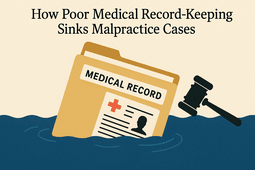

In the intricate realm of medical malpractice litigation, medical records serve as the definitive chronicle of a patient’s journey through the healthcare system. In Florida, as across the United States, the scrupulousness and comprehensiveness of clinical documentation are pivotal, often determining the outcome of legal proceedings. Deficiencies in record-keeping pose significant risks to both patients and legal practitioners. This exploration delves into how inadequate documentation undermines malpractice claims and highlights the strategies employed by the PWD Law Firm to overcome these challenges.
The Pervasive Problem: Florida’s Medical Documentation Crisis and Its Ramifications
According to the Florida Medical Board, over 40% of malpractice claims involve disputed or incomplete records. A 2023 Miami-Dade County case exemplifies this, where a $2.1 million verdict was overturned due to missing Emergency Room triage notes. This systemic issue threatens patient safety, erodes legal accountability, and undermines trust in Florida’s healthcare system.
Dissecting the Failures: Five Specific Documentation Pitfalls That Derail Cases
1. The Peril of Template Traps and Electronic Health Record (EHR) Pitfalls
Electronic Health Records (EHRs) have introduced issues like “copy-paste” documentation. In a 2024 sepsis case at Baptist Hospital, a templated note repeatedly described the patient as “alert and oriented,” despite evident deterioration, weakening the plaintiff’s claim of delayed intervention.
2. The Significance of Precise Timing: Time Stamp Gaps and Their Consequences
Precise timing is critical in malpractice litigation. In a Miami anesthesia case, missing time stamps on pain management orders obscured a 15-minute delay linked to a patient’s cardiac arrest, making it impossible to prove causation.
3. The Legal Necessity of Consent: Lost Consents and Informed Consent Violations
Consent forms are vital legal safeguards. At Jackson Memorial Hospital, the absence of a Spanish-language consent form for a non-English-speaking patient led to allegations of inadequate informed consent, significantly impacting the jury’s verdict.
4. The Ethical and Legal Implications of Record Alteration: Altered Records and Florida Statute §456.057
Altering records violates Florida Statute §456.057. In a Broward County case, metadata revealed post-incident edits, casting doubt on the record’s integrity and prompting heightened judicial scrutiny.
5. The Value of Nursing Observations: Missing Nurse Notes and Undocumented Handoffs
Nurses’ notes provide critical details, but undocumented verbal handoffs can lead to omissions. In one case, missing notes on a patient’s deteriorating mental status hindered establishing a timeline of neglect.
PWD Law Firm’s Strategic Documentation Recovery Process: Reconstructing the Medical Narrative
The PWD Law Firm employs a robust approach to retrieve and analyze medical records:
Meta-Analysis of EHR Audit Trails: We demand complete audit trails to reveal edits, deletions, and access logs, exposing changes or omissions.
Cross-Referencing Pharmacy Databases: Scrutinizing medication records uncovers discrepancies in dosing and timing.
Subpoenaing Device Log Data: Digital logs from devices like ventilators validate or challenge written records, providing objective corroboration.
Florida-Specific Legal Tools for Enhanced Record Recovery
Florida law offers unique avenues for record retrieval:
§766.102(5): Allows plaintiffs to compel unredacted peer review materials, revealing internal discussions about documentation issues.
The “90-Day Rule”: Provides a 90-day pre-suit window to request and review medical records, enabling thorough preparation.
Conclusion: The Path Forward in Navigating Documentation Challenges
Poor medical record-keeping is a formidable obstacle in malpractice litigation, but it is not insurmountable. By leveraging advanced forensic techniques and Florida’s legal tools, the PWD Law Firm ensures that incomplete or altered records do not impede justice. Our commitment to thorough documentation analysis empowers us to build robust cases and advocate effectively for victims of medical negligence.
