


How Weather and Road Conditions Affect Liability in Miami Truck Accidents
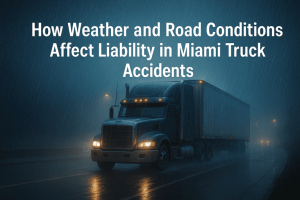
Weather and road conditions play a critical role in determining liability in Miami truck accidents. From sudden tropical downpours to congested highways and ever-present construction zones, Miami presents unique hazards for truck drivers. Understanding how these factors influence truck accident liability is essential for anyone involved in a crash with a commercial vehicle in South Florida.
Miami’s Unique Hazards: Weather and Road Conditions
Miami’s subtropical climate brings frequent thunderstorms, high humidity, and a hurricane season that can create hazardous driving conditions. According to the Federal Highway Administration, weather is a factor in about 21% of vehicle crashes nationwide, with Florida experiencing an even higher rate due to its weather extremes. Heavy rain, flooding, and poor visibility are common, especially during the summer and hurricane months.
Additionally, Miami’s infrastructure is constantly evolving. Construction zones are a fixture on major routes like I-95, the Florida Turnpike, and I-75. These zones create sudden lane shifts, narrowed roadways, and unpredictable traffic patterns, all of which increase the risk of truck accidents.
Congestion is another Miami-specific hazard. I-95, one of the busiest highways in the region, is notorious for stop-and-go traffic, aggressive driving, and frequent crashes involving large trucks. During peak hours and inclement weather, the risk of multi-vehicle pileups rises dramatically.
How Weather Conditions Affect Liability in Miami Truck Accidents
Weather-related truck accidents in Miami often involve complex liability questions. While poor weather can contribute to a crash, it does not automatically absolve truck drivers or their employers of responsibility. In fact, federal regulations require trucking companies and drivers to take proactive steps to mitigate weather risks, such as:
- Adjusting speed to match road conditions
- Increasing following distance in rain or fog
- Pulling over when conditions become too dangerous
- Maintaining equipment like brakes, tires, and windshield wipers to ensure safe operation in adverse weather
If a truck driver fails to take these precautions—such as speeding through a tropical downpour or ignoring a flooded roadway—they may be found negligent, even if the weather was a contributing factor. Similarly, a trucking company that fails to properly train drivers for Miami’s unique hazards or neglects vehicle maintenance can also be held liable.
Road Hazards: Construction Zones and Congestion
Construction zones present additional challenges for truck drivers in Miami. Narrowed lanes, abrupt stops, and confusing signage require heightened attention and slower speeds. Truck drivers must be especially vigilant in these areas, as even a minor mistake can lead to catastrophic accidents.
Liability in construction zone truck accidents often extends beyond the driver. If a construction company fails to provide adequate warning signs or creates unsafe detours, they may share responsibility for a crash. Likewise, government agencies could be liable for poor road design or failure to address dangerous conditions.
Congestion on highways like I-95 also increases the risk of rear-end collisions and multi-vehicle accidents. Truck drivers must maintain safe distances and be prepared for sudden stops. Aggressive driving, distracted driving, or failing to adjust to traffic flow can all constitute negligence in these scenarios.
Proving Liability: Evidence and Comparative Negligence
Establishing liability in Miami truck accidents involving weather and road hazards requires a thorough investigation. Key evidence may include:
- Black box data showing speed, braking, and steering inputs
- Dashcam or traffic camera footage of the crash
- Weather reports and road condition documentation
- Maintenance and inspection records for the truck
- Construction zone layouts and signage records
Florida follows a modified comparative negligence system, meaning multiple parties can share responsibility for a truck accident. For example, a truck driver may be 70% at fault for speeding in a rainstorm, while a construction company is 30% at fault for inadequate signage. Your compensation is reduced by your percentage of fault, and if you are found more than 50% at fault, you cannot recover damages.
What to Do After a Miami Truck Accident Involving Weather or Road Hazards
- Call 911 and seek medical attention immediately.
- Document the accident scene, noting weather and road conditions.
- Take photos of vehicle damage, skid marks, and any hazards present.
- Collect contact information from witnesses.
- Contact an experienced Miami truck accident attorney to investigate liability and preserve crucial evidence.
Sources:
- Who’s Liable in a Miami Truck Accident? – PWD Law Firm
