


Slip and Fall Settlements vs. Trials in Miami
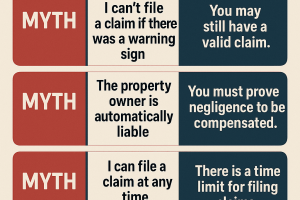
A slip and fall accident in Miami—whether on a wet floor in a Wynwood store or a loose tile in a Coral Gables office—can lead to serious injuries, mounting medical bills, and emotional distress. Deciding whether to settle your case out of court or pursue a trial is a pivotal choice that can impact your compensation and recovery. Both options have benefits and risks, and the best path depends on your case’s specifics. At PWD Law Firm, our experienced Miami slip and fall lawyers guide clients through this decision, ensuring they receive fair compensation. This article explores the differences between settlements and trials, when each is appropriate, and how we can help you achieve justice.
What Is a Settlement?
A settlement is an agreement between you and the property owner (or their insurer) to resolve your slip and fall claim without going to court. You accept a specific amount of compensation in exchange for dropping your legal claims. Settlements are the most common outcome for slip and fall cases, as they offer a faster and less costly resolution than trials.
Pros of settling include quicker access to compensation, often within months, allowing you to cover medical expenses or lost wages sooner. For example, a Miami resident injured in a supermarket fall can use settlement funds to pay for physical therapy without waiting years for a trial. Settlements also reduce legal costs and avoid the uncertainty of a jury’s decision, providing a guaranteed outcome. Additionally, they spare you the emotional stress of a courtroom battle, letting you focus on recovery.
Cons include the risk of accepting less than your case’s full value. Insurance companies may offer lowball settlements early, hoping you’ll agree before understanding long-term costs, like ongoing care for a fractured hip. Once you settle, you cannot seek additional compensation, even if new injuries emerge. PWD Law Firm ensures you don’t accept an inadequate offer by thoroughly evaluating your damages and negotiating for a fair amount.
When to Go to Trial
A trial involves presenting your case in court, where a judge or jury determines liability and awards damages. Trials are less common but may be necessary when a fair settlement isn’t possible. When to consider a trial depends on factors like the severity of your injuries or disputes over liability. If the property owner’s insurer refuses to offer adequate compensation for a severe injury, like a traumatic brain injury (TBI) requiring lifelong care, a trial may be the best way to secure what you deserve.
Trials are also appropriate when liability is contested. For instance, if a Miami mall denies responsibility for a fall caused by a known hazard, like a loose tile, a trial can establish fault through evidence and testimony. In rare cases of gross negligence—such as a store ignoring repeated complaints about a dangerous condition—a jury may award punitive damages to punish the owner. However, trials are time-consuming, often taking years, and outcomes are uncertain, as juries may award less than expected or rule against you. PWD Law Firm weighs these risks to recommend the best course.
How PWD Law Firm Prepares
Whether aiming for a settlement or trial, PWD Law Firm employs a rigorous strategy to maximize your compensation. For settlements, we calculate your damages comprehensively, including medical costs, lost wages, and pain and suffering. We consult medical experts to project future expenses, ensuring your settlement covers long-term needs, like therapy for a spinal injury. Our investigation gathers evidence—surveillance footage, incident reports, and witness statements—to prove the property owner’s negligence, strengthening our negotiation position. We counter low offers with detailed demand letters, often securing favorable settlements without court.
For trials, our preparation is even more intensive. We build a compelling case by collaborating with accident reconstructionists to show how a hazard, like a wet floor, caused your fall. Medical experts testify about your injuries’ severity, while vocational experts assess lost earning potential. We use visual aids, like diagrams of the accident scene, to engage the jury. Our attorneys, experienced in Miami’s courts, present persuasive arguments to secure verdicts reflecting your losses. In both scenarios, we navigate Florida’s comparative negligence law, using evidence to minimize your fault and emphasize the owner’s responsibility.
Maximizing Your Outcome
Maximizing your compensation requires a tailored approach, whether settling or going to trial. For settlements, PWD Law Firm negotiates relentlessly, using evidence to justify higher payouts and ensuring your injuries are fully diagnosed before agreeing to a deal. For trials, we prepare meticulously, anticipating defense arguments and presenting a clear narrative of negligence and harm. Our goal is to secure damages for medical bills, lost income, emotional distress, and more, providing the resources to rebuild your life.
We keep you informed throughout, explaining each option’s pros and cons and aligning our strategy with your priorities, whether speed or maximum compensation. Our experience in slip and fall cases ensures we adapt to your case’s unique challenges, delivering results that reflect your losses.
Contact Us for Guidance
Deciding between a settlement and a trial is a critical step in your slip and fall case, and PWD Law Firm is here to guide you with expertise and care. Our experienced Miami slip and fall lawyers have a proven track record of securing fair compensation, whether through negotiation or litigation. We understand the complexities of premises liability and are committed to fighting for your rights, ensuring you receive damages for your injuries and losses.
Don’t let time or insurance tactics undermine your claim. Florida’s statute of limitations gives you two years from the accident date to file a lawsuit (as of 2025), but acting quickly preserves evidence. Contact PWD Law Firm today for a free consultation to discuss your options and learn how we can help.
Visit our contact page or call us to get started. Let us help you achieve the justice and compensation you deserve.
