


Your Medical Record Audit Checklist: 15 Items to Demand Before Suing
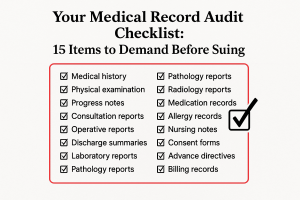
Before filing a medical malpractice lawsuit in Florida, a thorough medical record audit checklist is essential to build a strong case. Comprehensive medical records provide the evidence needed to prove negligence and secure compensation. This article outlines 15 critical items to include in your medical record audit checklist, how to obtain them under Florida law, and steps to take if records are incomplete or denied.
Why a Complete Medical Record is Essential
Medical records are the cornerstone of any malpractice case, documenting the care you received and any deviations from the standard of care. In Florida, where malpractice claims rose by 15% from 2020 to 2024, incomplete or inaccurate records can weaken your case, making it harder to prove negligence. A medical record audit checklist ensures you have all necessary documents to support your claim, from lab results to EHR metadata, helping you avoid costly delays or dismissals.
The 15 Critical Items in Your Medical Record Audit Checklist
Before suing, demand these 15 items as part of your medical record audit checklist to uncover evidence of negligence:
-
Admission and Discharge Summaries: Details of your hospital stay, including reasons for admission and discharge conditions.
-
Physician Notes: Daily notes from doctors, including diagnoses, treatment plans, and observations.
-
Nurse Triage Notes: Initial assessments capturing symptoms, vital signs, and patient complaints.
-
Lab Results: Blood tests, biopsies, or other diagnostics that may reveal missed or delayed diagnoses.
-
Imaging Reports: X-rays, MRIs, CT scans, and radiologist interpretations for evidence of oversight.
-
Medication Records: Lists of prescribed drugs, dosages, and administration times to identify errors.
-
Surgical Reports: Operative notes, including pre- and post-surgical assessments, for potential procedural mistakes.
-
Consent Forms: Signed documents showing what procedures you agreed to and whether informed consent was properly obtained.
-
EHR Audit Trail: Metadata showing when records were created, edited, or accessed to detect alterations.
-
Consultation Reports: Notes from specialists consulted during your care for additional perspectives.
-
Vital Signs Logs: Records of heart rate, blood pressure, and other metrics to track changes in condition.
-
Progress Notes: Updates from all providers, including therapists, to document ongoing care.
-
Billing Records: Charges for services rendered, which can reveal discrepancies in documented vs. actual care.
-
Communication Logs: Records of phone calls, emails, or messages between providers or with you.
-
Incident Reports: Internal hospital reports of adverse events, such as falls or medication errors.
Each item in this medical record audit checklist can reveal critical evidence, such as missing consents or inconsistent vital signs, to strengthen your case.
How to Request Records Under Florida Law
In Florida, patients have the right to access their medical records under HIPAA and Florida Statutes Section 395.3025. To obtain your records:
-
Submit a Written Request: Provide a signed letter to the hospital or provider, specifying the records you need (use the checklist above).
-
Include Identification: Attach a copy of your ID to verify your identity.
-
Request Electronic Copies: Ask for digital records, including EHR audit trails, to ensure completeness.
-
Pay Reasonable Fees: Florida allows providers to charge up to $1 per page for paper copies, but electronic copies may be cheaper.
Providers must comply within 30 days under HIPAA. Request records as soon as possible, as Florida’s statute of limitations for malpractice is two years from the incident or discovery of harm (Florida Statutes Section 95.11(4)(b)).
What to Do If Records Are Incomplete or Denied
If records are incomplete or access is denied, take immediate action:
-
Follow Up in Writing: Send a certified letter reiterating your request, citing HIPAA and Florida law.
-
Contact the Patient Advocate: Most Florida hospitals have advocates who can assist with record disputes.
-
File a Complaint: Report denials to Florida’s Agency for Health Care Administration (AHCA) or the U.S. Department of Health and Human Services.
-
Consult an Attorney: A malpractice lawyer can subpoena records or negotiate with providers to obtain missing documents.
Incomplete records, such as missing lab results or altered notes, can themselves be evidence of negligence, so document all interactions with the provider.
PWD’s Pre-Suit Record Review Process
Firms like PWD use a rigorous pre-suit process to review your medical record audit checklist. Their approach includes:
-
Comprehensive Analysis: Checking all 15 checklist items for inconsistencies, omissions, or signs of tampering.
-
EHR Metadata Review: Examining audit trails to detect backdated or altered entries, which occurred in 20% of their 2023 cases.
-
Expert Consultation: Engaging medical experts to interpret records and identify deviations from the standard of care.
PWD’s thorough review helped secure settlements in 80% of their 2023 Florida malpractice cases by identifying critical evidence early.
Patient Tips: Organizing Your Medical File
Organizing your medical record audit checklist ensures easy access for your legal team. Follow these tips:
-
Create a Digital Folder: Store electronic records in a secure cloud service or external drive, labeled by document type (e.g., “Lab Results 06-2025”).
-
Use a Physical Binder: For paper records, use dividers to separate categories like nurse notes, imaging, and consents.
-
Annotate Key Issues: Highlight red flags, such as missing signatures or conflicting entries, with sticky notes or digital comments.
-
Maintain a Timeline: Create a chronological log of medical events, cross-referencing records to track care progression.
-
Share with Your Attorney: Provide organized copies to your lawyer to streamline case preparation.
A well-organized file can expedite your case and prevent critical evidence from being overlooked.
When to Escalate to Legal Action
Once you’ve compiled your medical record audit checklist, consult a malpractice attorney if you identify red flags like missing consents, inconsistent notes, or evidence of errors. Act quickly, as Florida’s two-year statute of limitations is strict. An attorney can evaluate your records, engage experts, and file a notice of intent to sue, as required under Florida Statutes Section 766.106. Early legal action ensures your case is built on a solid foundation of evidence.
Conclusion: Building a Strong Foundation for Your Case
A comprehensive medical record audit checklist is your first step toward a successful malpractice lawsuit. By demanding all 15 critical items, from lab results to EHR audit trails, you can uncover evidence of negligence and strengthen your claim. In Florida’s complex legal landscape, proactive record collection, organization, and legal consultation empower you to hold providers accountable. Don’t let incomplete records undermine your case—start building your foundation today.
