


Does a Yellow Sign Really Protect a Business From a Miami Slip and Fall Claim?
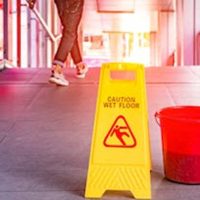
Walk into almost any Miami grocery store, hotel lobby, or restaurant and you have probably stepped around a small yellow cone warning you the floor is wet. It seems like a simple, responsible gesture. But does that cone actually shield the business from a lawsuit if you fall anyway? As Miami slip and fall attorneys, we get asked this question constantly, and the honest answer is more complicated than most people expect.
A Warning Is Not a Force Field
A wet floor sign is evidence, not immunity. Florida law does not say that placing a cone automatically erases a property owner’s responsibility. Instead, courts look at whether the warning was adequate under the circumstances. Was it placed close enough to the hazard? Was it visible from the direction people were actually walking? Was it left up long after the floor had dried, training customers to ignore it entirely? A sign that is poorly positioned or so routine that nobody notices it anymore can actually work against the business, not for it.
What the Law Actually Requires
Under Florida Statute 768.0755, a person injured by a wet floor in a business establishment must show the business had actual or constructive knowledge of the hazard and failed to fix it within a reasonable time. Constructive knowledge can be proven by showing the spill existed long enough that reasonable inspections should have caught it, or that the same type of hazard happened often enough to be foreseeable. This is where timing becomes everything. A sign placed the moment a spill occurs looks like diligence. A sign that appears only after a customer has already fallen looks like an admission.
The Timing Question Nobody Asks
Here is the curious part. Businesses sometimes keep wet floor signs out for hours after mopping has finished, either out of habit or because staff forgot to remove them. That practice can blur the picture in litigation. If a business argues it had no way of knowing about a hazard, but its own signage suggests staff knew a wet surface existed for an extended stretch of time, the two positions can contradict each other. Surveillance footage, cleaning logs, and employee schedules often become the real evidence in these cases, far more than the sign itself.
Comparative Fault Still Matters
Florida is a modified comparative negligence state, meaning your own conduct can reduce or bar your recovery if you are found more than fifty percent at fault. If a sign was clearly placed and clearly visible, an injured person who was looking at their phone instead of the floor may share some responsibility. That does not mean the claim disappears. It means the percentages get argued, and that argument benefits from experienced counsel who knows how Miami courts and insurers typically weigh these facts.
Contact Us Before You Talk to the Insurance Company
If you slipped on a wet floor in Miami and are unsure whether that yellow cone helps or hurts your case, do not guess. Pita Weber Del Prado has spent years untangling exactly these disputes, and we know which details insurance adjusters try to gloss over. Call our office today so we can look at the specific facts of your fall and tell you honestly where you stand.
Source:
flsenate.gov/Laws/Statutes/2024/0768.0755
