


Is a Guard Gate Just for Show? What Happens When Community Security Fails
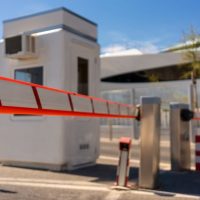
Gated communities sell a feeling as much as a physical barrier. The gate, the code pad, the roving patrol car, all of it promises residents a layer of protection that ordinary neighborhoods do not have. So what happens when that promise turns out to be hollow? As Miami premises liability attorneys, our firm has represented clients whose community gates were broken, propped open, or so easily bypassed that the sense of safety was little more than an illusion.
The Gap Between Marketing and Maintenance
Developers advertise gated access as a premium feature, and homeowners associations often charge accordingly. Yet gates fall into disrepair more often than residents realize. A malfunctioning arm that stays raised, a broken keypad that lets anyone tailgate behind a resident’s car, or cameras that were never actually connected to a monitoring service can all turn a supposed security feature into a liability risk instead. When a criminal act occurs on the property, the question becomes whether the association or management company knew about these gaps and failed to correct them.
Why Foreseeability Drives These Cases
Florida negligent security claims hinge heavily on foreseeability. If similar incidents, break ins, car thefts, or assaults, had already happened on or near the property, the property owner arguably had notice that additional protection was necessary. Internal incident reports, prior police calls, and even resident complaints at association meetings can become central pieces of evidence. A single isolated event is harder to litigate than a pattern the community ignored.
A New Statute Changes the Calculation
In 2023, Florida lawmakers created Section 768.0706, which gives owners and operators of qualifying multifamily residential properties a presumption against liability if they substantially implement specific security measures, including functioning cameras at entry points, adequate lighting, secured locks on doors and windows, and locked gates around amenity areas. This statute cuts both ways. Communities that meet the checklist gain real legal protection. Communities that do not, despite charging residents for the perception of security, lose one of their strongest defenses. Reviewing whether a property actually complied with these requirements is often the first step in evaluating a claim.
Ask the Uncomfortable Questions Early
Residents rarely think to document gate outages or broken lighting until after something happens. If you live in a gated community, it is worth asking how often the gate has been out of service, whether the association tracks those outages, and whether anyone has raised safety concerns at board meetings. Those answers matter far more after an incident than most people expect, and gathering them quickly can make or break a claim.
We Investigate What the Association Would Rather You Not Ask
Security failures are rarely obvious from the outside, which is exactly why they persist. If you or someone you love was hurt because a gated community failed to deliver the protection it promised, reach out to Pita Weber Del Prado. We know how to request maintenance records, incident logs, and prior complaints that associations are otherwise reluctant to hand over voluntarily.
Source:
flsenate.gov/Laws/Statutes/2024/0768.0706
