


Unbuckled and Injured: How Much Can Florida’s Seat Belt Defense Trim From a Miami Car Accident Claim?
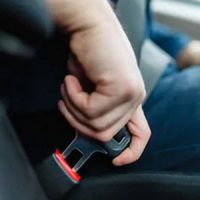
Insurance adjusters love one question after a crash: were you wearing your seat belt? It is not small talk. In Florida, a missing belt can become a tool for shrinking a claim. Our Miami car accident attorneys get ahead of that argument by knowing exactly how far the defense can go, and where it runs out of road.
What the Statute Actually Says
Section 316.614 of the Florida Statutes requires drivers and front-seat passengers 18 and older to wear safety belts, and it requires every passenger under 18 to be restrained. The statute defines “restrained” as an appropriately adjusted belt that is properly fastened whenever the vehicle is moving, which an insurer may argue rules out a shoulder strap tucked behind the back.
The key sentence is in subsection (10). A violation is not negligence per se, is not prima facie evidence of negligence, and is not a basis for mitigating damages. It may be considered only as evidence of comparative negligence in a civil case.
How the Math Works
Comparative negligence is where the belt matters. Under section 768.81(2), a claimant’s share of fault reduces the award proportionally. On a $500,000 verdict, for example, a jury that assigns 15 percent of the fault to an unbelted plaintiff would lower the recovery to $425,000. Florida also bars recovery entirely for a plaintiff found more than 50 percent at fault for his or her own harm under section 768.81(6), a rule that raises the stakes when an insurer stacks several arguments together.
A seat belt cannot be blamed for harm it would not have prevented. The defense generally has to connect the missing belt to the injuries, not merely show that it was unbuckled.
Questions That Decide the Defense
- Was the belt actually unfastened, or does the claim rest on an assumption in a rushed report?
- Would the same injuries have happened even with a belt, such as a head strike from another direction?
- Do vehicle data, photographs, and emergency records show how the person was positioned?
- Can a medical expert tie specific injuries to the missing belt?
Why Insurers Keep Asking
Most people buckle up. The National Highway Traffic Safety Administration’s 2025 survey found that 91.3 percent of adult front-seat passengers in passenger vehicles were belted, so jurors tend to take the question seriously. That is exactly why it deserves a real answer instead of a shrug.
Let’s Look at the Evidence, Not the Excuse
If an insurer is pointing at your seat belt to lower your claim, Pita Weber Del Prado wants to see the facts behind the argument. We can examine the crash data, the medical records, and the vehicle itself, then push back when the defense does not hold up. Reach out to our Miami car accident attorneys to talk through your options.
Sources:
https://flsenate.gov/Laws/Statutes/2025/0316.614
https://flsenate.gov/Laws/Statutes/2025/768.81
https://crashstats.nhtsa.dot.gov/Api/Public/ViewPublication/813799
